Why are there Curfew Laws?
📅 2026 Update: Changes in Curfew Laws and Enforcement
Since the original article was published, several notable developments have occurred in the realm of curfew laws. Discussions are ongoing about how these laws are enforced and their effectiveness. This update will highlight the most relevant changes since 2024, while the earlier article continues further down the page.
🏙️ Chicago's Ongoing Debates
In February 2026, the Chicago City Council debated tightening curfew laws in response to the rise of teen "takeovers" in downtown areas. This reflects a growing concern about youth behavior during late-night hours and the need for stricter regulations in some urban settings.
⏰ Curfew Times and Variations
Curfew hours differ widely by locality across the U.S. Most jurisdictions set curfews between 9:00 PM and 11:00 PM, with enforcement usually ending between 5:00 AM and 6:30 AM. These varying times can influence how communities perceive safety and youth behavior.
🚓 Enforcement and Immediate Response
When curfew laws are violated, police can disperse minors from public areas during curfew hours. If minors refuse to leave, they may be taken to a station to await their parent or guardian. Violations are typically addressed promptly to ensure minors are returned home safely.
📜 Legal Challenges and Rights
Curfew laws have faced scrutiny and legal challenges, particularly surrounding their constitutionality. Courts have emphasized the importance of protecting minors' First Amendment rights, leading to adjustments in how these laws are applied and enforced.
📊 Community Impact and Safety Goals
The primary aim of curfew laws is to enhance public safety by reducing juvenile crime and protecting minors from potential harm. However, studies have shown mixed results regarding their effectiveness, leading to ongoing public discourse about their impact on youth and community dynamics.
📌 Key Points Summary
- 🔍 Chicago is considering tightening curfew laws amid concerns about youth behaviors.
- 🕘 Curfew hours vary significantly by location, affecting community safety perceptions.
- 🚔 Minors can be taken to a police station if they violate curfew.
- ⚖️ Legal challenges highlight the need for constitutional protections for minors.
- 🌍 The effectiveness of curfew laws remains a topic of public debate.
💡 Tips for Understanding Curfew Laws
Review the details of your own situation with your attorney.
🕵️♂️ Know Your Local Curfew Times
Understand the specific curfew hours in your area. This can help avoid fines or other penalties associated with violating local laws.
📚 Familiarize Yourself with Exemptions
Many curfew laws have exemptions for minors accompanied by parents or guardians, or those traveling to and from work. Knowing these exceptions can help avoid unnecessary penalties.
⚖️ Be Aware of Your Rights
Minors and their parents should be informed about legal rights related to curfew laws. This knowledge can be beneficial if a violation occurs or if a minor is confronted by law enforcement.
📞 Contact Local Authorities for Clarification
If uncertain about specific laws or enforcement policies, contacting local law enforcement or city officials can provide clarity. This is especially important as laws can change.
👨👩👧👦 Discuss Curfew Rules at Home
Parents should regularly discuss curfew rules and expectations with their children. Open communication can help ensure compliance and foster a responsible understanding of the laws.
🌟 Engage with Community Programs
Participating in community programs aimed at supporting youth can help address underlying issues related to curfews. These programs can offer alternatives to strict enforcement and promote positive behavior.
❓ Frequently Asked Questions
🚦 What are the main reasons for curfew laws?
Curfew laws aim to enhance public safety by regulating the presence of minors in public spaces during late-night hours. They seek to reduce juvenile crime and protect minors from potential harm.
📅 How do curfew hours vary across different areas?
Curfew hours can vary significantly, typically starting between 9:00 PM and 11:00 PM and ending between 5:00 AM and 6:30 AM. Residents should check their local laws for specific times.
⚖️ What happens if a minor is caught violating curfew?
If caught violating curfew, a minor may be dispersed from public areas by police. If they refuse to comply, they may be taken to a police station to wait for a parent or guardian.
👩👧 Are there exemptions to curfew laws for minors?
Yes, many curfew laws include exemptions. These may apply to minors with a parent or guardian, those traveling to or from work, or individuals attending school or civic activities.
📞 How can parents ensure their children follow curfew laws?
Parents can discuss curfew rules openly with their children and emphasize the importance of understanding these laws. Engaging in community programs can also promote responsible behavior.
📰 How are curfew laws being challenged in court?
Curfew laws often face legal challenges related to constitutional rights, particularly the First Amendment. Courts have struck down ordinances that do not adequately protect minors' rights.
⚖️ Recent Cases Involving Curfew Laws
Recent court rulings have addressed the legality and enforcement of curfew laws, emphasizing the need for clear protections for minors' rights. These decisions demonstrate how laws evolve in response to societal values and legal interpretations.
- Florida court affirms ruling in Griffin v. State appealDistrict Court of Appeal of Florida · October 20, 2026
- Court affirms summary judgment in Gomez v. City of VancouverCourt of Appeals of Washington · October 20, 2026
- Court affirms summary judgment in Matthews v. City of TacomaCourt of Appeals of Washington · October 20, 2026
- Court rules on simple assault's status in Pennsylvania lawCommonwealth Court of Pennsylvania · May 28, 2026
For more recent rulings, feel free to browse more rulings on the news page.
End of October 2026 Update
Introduction:
Curfew laws are an often-controversial aspect of the legal system that prohibit minors from being out in public places during certain hours. The restrictions are meant to maintain order and safety in an area, but they can also lead to criticism from both parents and young people who argue the rules are overly restrictive. Here are some reasons why curfew laws are in place and how they impact society.
Reducing Juvenile Crime:
The primary purpose of curfew laws is to curb juvenile delinquency. Keeping children and teens off the streets during specific hours often leads to lower crime rates. Young people who are out past midnight are more likely to engage in criminal behavior or become victims of crime. Curfew laws are used as a deterrent, making it harder for them to perpetrate illegal activities.
Community Safety:
Another reason for imposing curfews is to safeguard the community from crime and other problems, such as vandalism and property damage. When minors are kept off the streets, it lessens the chances of criminal activities, and families feel comfortable and safe knowing that their children are indoors and away from danger.
Parental Responsibility:
Curfew laws empower parents and guardians to keep track of their children’s whereabouts and ensure they are not engaging in unsafe behavior. It fosters parent-child communication and helps families reinforce household rules, making it easier for parents to be aware of their kids’ activities and raise healthy and responsible children.
Protecting Education:
Curfew laws that prevent minors from being outside after certain hours during school nights help ensure that young people are getting enough sleep and attending school regularly. Adequate sleep has been linked to better academic performance and overall well-being, so keeping teens in at a reasonable time will help them become more successful and lead fulfilling lives.
Conclusion:
Curfew laws can be a useful tool in keeping young people safe off the streets while giving parents a level of control over their kids' activities. However, there are potential downsides to such regulations, including subjecting youths to unnecessary criminalization, shaming parents who cannot afford to hire a babysitter, and damaging the future prospects of certain demographic groups. Nevertheless, by carefully balancing the protection of social order with personal freedom and self-expression, curfew laws can continue to be a critical aspect of maintaining order and safety in our society.
Curfew laws pertain to time limits placed on people. These time limits usually dictate to citizens of a given state or locale what amount of time they are allowed in public places. These public places can be anything from street corners to actual businesses.
In Many instances curfew laws affect businesses as well. If a curfew is placed on citizens that do not allow them to be in a public place, and it happens to be a business, than usually that business has the same curfew. Most curfew laws make sense in this way, because if people are not allowed in a business, how is it supposed to grow and profit during that time? Often times these curfew laws work in the favor of businesses.
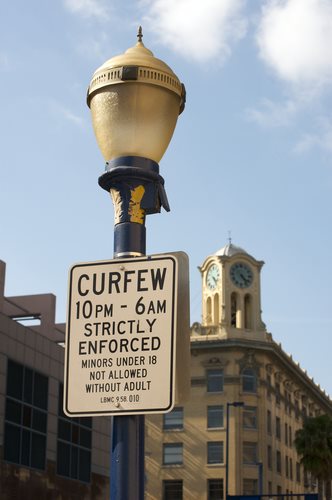
There are three categories in which curfew laws are established, juvenile, emergency, and business. Curfew laws given to juveniles are usually enacted at the lower levels of government, being local or state. They pertain to children under the age of eighteen, and usually involve specific restrictions. Typically, juvenile curfews will restrict minors from a certain public area, or business. Time limits are given to ensure clarity of these laws. The purpose of juvenile curfews is to ensure the safety of minors, as well as prevent crime, and regulate society. Keeping juvenile curfew laws at the local level make it easier to regulate issues from area to area. This is important because different areas have to focus on different issues. It is vital to the success of the law enforcement that these are relevant, hence the local enforcement. Often the restrictions given are legal before the given time, but require general stipulations after hours like; The presence of a parent, guardian, or an adult over the age of twenty one. Underage teens driving a motor vehicle.
School attendance or religious participation
The running of errands alone instead of with an adult. Emergency situations. Punishment for violating curfew when one is a juvenile differs from state to state and even locale to locale, however the basics include; Monetary Fines that differ depending on the violation and the amount of times the law is broke. Volunteer or community service work Programs that must be attended after school, or enrollment in a school activity to distract a juvenile. Restrictions and suspensions of driving permits or licenses.
Parent or guardian penalties. In some states juvenile curfews are only given on a need basis. This means that local governments reserve the right to chose when these laws take effect. They can remain in effect all year or only during the summer or vacation months when kids are home most. Most juvenile laws give state and local governments the authority to be as strict or as sympathetic as possible. This gives an officer the authority to help a kid out and slap them on the wrist, suggest parent and child counseling and alike.Juvenile curfew laws have been fought due to different reasons that are circumstantial to each case.
However, the most noted reasons that citizens fight juvenile curfew include; When the law is too general for children and parents to understand fully. A law that doesn't allow parents to make their own decisions regarding their child. In this instance, most people fight that the government is interfering with their personal right to parent. When racial profiling is at the base of law enforcement. When traveling between states. Emergency curfew laws are enforced on all level of government, being local, state, and national.
These curfew laws are enforced in response to a problem. These problems can include a local, state, or national crisis, natural disaster, or general disturbance that is continuous in nature. These can include; Hurricane warnings that require citizens to remain indoors for safety. After hurricanes so that cities and states can clean up quickly, and safely.
During revolutions and movements that get out of hand. Many cities and towns create acts that give mayors, governors, presidents and other state officials the right to enact laws for a moment to protect the majority. For example during a terrorist attack, or a flu outbreak, a temporary law may be enacted. These emergency laws are usually only temporary and need based. Additionally, if crime, specifically killing sprees and mass murders are occurring in an area, an emergency curfew will be enforced.
These laws are issued when people are in a state of panic and danger, and give officials control over sensitive situations. Business curfew laws are those that require businesses to close during given hours. Many times they are required to close for the safety of the employees and the business itself. In areas where the crime rate is high, and the population is large and diverse, these laws become necessary. A time frame is usually given to these businesses so that during late hours, when crime is highest, people are not put in danger.
These laws usually apply to restaurants, drug stores, twenty four hour corner stores like seven eleven, or other places where loitering can cause danger. Giving curfews to a business can sometimes hurt profit for a business owner, but for the most part it protects it. The idea is that more money will be lost if an opportunity for theft and or crime presents itself, than if they close during earlier hours. Business curfew laws are not always enforced year round but on an as need basis.
Laws regarding curfews of all kinds can be found on national, state, and local websites. To aid citizens in better understanding why they exist, governments usually provide the actual PDF of the laws online. Citizens can read through the law and view amendments that have been written to change them.
Additionally, schedules or enforcement, and or special circumstances are normally listed as well. If certain governments do not post these items online will provide the same information in their government offices. Curfew Laws are not always followed. However, they do serve a purpose to protect citizens and prevent crime.